
The Silent Stressor: How Insomnia Fuels Anxiety, Depression, and Burnout

Most people brush off a rough night of sleep. You wake up groggy, power through the day with coffee, and tell yourself you’ll catch up on rest later. But when sleepless nights become the norm instead of the exception, the consequences don’t just show up under your eyes, they show up in your mental health, too.

Insomnia is one of the most underestimated triggers of emotional distress. It creeps in quietly, disrupts your natural rhythm, and slowly chips away at your emotional resilience. What begins as “just a little trouble sleeping” can spiral into something far more serious: chronic anxiety, depression, and even full-blown burnout.

When the Body Doesn’t Sleep, the Mind Doesn’t Heal

Sleep is not just rest, it’s a form of repair. During deep sleep, your brain clears waste, resets neurotransmitters, and processes emotions. Without this essential reset, you’re left operating on fumes.

Insomnia disrupts this process. And when the brain doesn’t get the downtime it needs, emotional regulation begins to suffer. You’re more irritable, less patient, and easily overwhelmed. Tasks that once felt manageable start to feel impossible. Over time, this creates a snowball effect. Your mental capacity shrinks as stress builds.

You can’t pour from an empty cup. And insomnia quietly drains it, drop by drop.

The Anxiety-Insomnia Cycle: A Vicious Loop

One of the most common emotional companions of insomnia is anxiety. And frustratingly, they tend to feed each other in a loop.

You lie in bed worrying about tomorrow’s to-do list. Your mind races. You check the clock; it’s 2:00 AM. The anxiety about not sleeping makes it even harder to fall asleep, and you wake up exhausted. As the cycle repeats, your brain starts associating bedtime with stress.

The more nights you spend tossing and turning, the more anxious you become. It’s a loop that’s tough to break, but it starts with recognizing that insomnia isn’t just a symptom of anxiety; it’s often a driver of it.

Depression: When Sleeplessness Steals Your Joy

Sleep disturbances are a core feature of depression. But insomnia doesn’t just tag along for the ride, it can help drive the condition forward.

People with chronic insomnia are significantly more likely to develop depression. Why? Because sleep deprivation alters brain chemistry, particularly in areas tied to mood regulation like serotonin and dopamine. Over time, this imbalance can drain your energy, numb your emotions, and strip away your ability to feel joy or connection.

The worst part? When you’re depressed and not sleeping, it becomes harder to find the motivation to seek help. You may isolate, withdraw, or assume this is just your “new normal.”

It’s not. And you don’t have to live this way.

Burnout: The Slow Fade Caused by Sleeplessness

Burnout isn’t just about long work hours or high-pressure jobs. At its core, burnout is about depletion of energy, patience, and mental bandwidth. And chronic insomnia is a fast track to that depletion.

You may still be going through the motions, showing up to work, handling responsibilities, but you’re emotionally checked out. The passion you once had is replaced by numbness. Small tasks feel monumental. And because burnout is so often associated with productivity, people ignore the role poor sleep plays in it.

When your brain doesn’t get rest, your body can’t recover. And when you ignore that fatigue, burnout comes knocking.

The Warning Signs You Shouldn’t Ignore

Insomnia often doesn’t come alone. If you’re dealing with consistent sleep disruption, it’s worth paying attention to the following signs:

  • Persistent low mood or irritability
  • Racing thoughts or constant worry
  • Difficulty concentrating or remembering things
  • A sense of emotional numbness or detachment
  • Physical symptoms like headaches, muscle tension, or digestive issues
  • A loss of interest in things you once enjoyed

These aren’t just signs of a bad week. They’re signs that something deeper is going on, and that support might be needed.

What You Can Do

The good news is that insomnia isn’t a life sentence. It’s treatable, and addressing it can have a profound effect on your mental health.

A few approaches that help:

  • Cognitive Behavioral Therapy for Insomnia (CBT-I): One of the most effective treatments that addresses both sleep habits and thought patterns.
  • Sleep hygiene improvements: Consistent bedtimes, reduced screen time, and winding down rituals make a difference.
  • Stress-reduction practices: Mindfulness, gentle exercise, and breathing techniques can ease both anxiety and sleep disruption.
  • Professional support: Sometimes, sleep issues are tied to deeper emotional concerns. A therapist can help untangle the root causes and provide tailored solutions.

In Closing

Insomnia might seem like a background issue, just something to deal with on top of everything else. But the truth is, it’s often the silent engine behind much deeper struggles with anxiety, depression, and burnout.

If you’ve been running on empty, consider this your reminder: your mental health is worth the rest. You deserve nights of deep sleep and days full of energy. And with the right support, healing is possible.

Let your rest become a priority again. Your mind will thank you for it.

Stay Active During COVID-19 with BrainStim Centers

COVID-19 took us all by surprise and has definitely kept us under the unknown for way too long. For many of us, staying at home means giving up on a daily routine. With fitness centers such as yoga and Pilates studios closed, we have had to adapt to a new normal.

Why should I care and keep my body moving?

Working out is not only about physical appearance or feeling strong. Working out helps to decrease stress hormones like cortisol and epinephrine in our bodies. After a workout, your body’s chemical balance will positively change leaving you feeling relaxed and happy.

Moreover, working out has similar effects as antidepressant medication. The purpose of antidepressants is to increase the amount of serotonin—your happy hormone. Working out can also help manage anxiety and panic attacks. The American Psychological Association (APA) states that physical stress during working out mirrors those attacks. The more you work out, the better your response will be during those overwhelming moments. According to the APA, it has been proven that at least 30 minutes a day of any type of physical activity can make a huge difference and increase the amount of serotonin in your body!

What can I do when my gym is closed?

Gym closures don’t mean we can’t work out anymore. There are numerous physical activities to choose from such as walking, bike riding, dancing, hiking, yoga, Pilates…you name it! You can stay active outside of your house, get some fresh air, and go for a walk or hike. If you prefer to stay indoors, YouTube has a great selection for at-home workouts or you can find workout applications for any smart device. We recommend checking out Pamela Reif for workout videos and Yoga with Adriene on YouTube. These two women can change your life and you don’t even need to leave your living room!

Here at BrainStim Centers, we offer free classes via Zoom. Join us for one of our Zumba, Meditation, Yoga, or Pilates classes. This is a great opportunity to explore new outlets to help manage any stressors you may be facing.

Our upcoming Zoom classes are:

Monday, November 30 -Zumba with Dario at 7 pm

Monday, December 14- Breathwork & Meditation with Wendy Hassenpflug 7 pm

Tuesday, December 29- Pilates with Cristina 11:30 am

Send an email request to info@brainstimcenters.com to receive a link to our zoom classes.

Personal Stories of Success through TMS Therapy

Below is a spotlight on our recent program success story with our patient Nikki, who has bravely offered to share her journey and speak up about her experience with us at BrainStim Centers, in order to support and help others who may be struggling with challenges.

When I caught up with Nikki, she said, “For the first time in many years (and with the observation of a psychiatrist) I am finally off of medication.” An impressive shift for sure. Let’s review her experience in her own words:

BSC: How did you hear about BrainStim Centers and the TMS program?

Nikki: I am a patient of Dr. Liker. When I saw him at my first appointment for a spinal surgery, I asked him about his mental health care program and if he could help me. I had noticed when reviewing Dr. Liker before my appointment, that not only is he a neurosurgeon, he is an advocate of TMS and the owner of a TMS facility.

BSC: Tell us about your first impression of BrainStim Centers, and about the initial treatment.

Nikki: After my first consultation with Dr. Reyes and completing the assessment tests, which were fun and interesting, I had to wait for a bit for insurance approval before starting my treatments. Although, during the pandemic, it did take a little more time than usual to get approved, I have to say that I have never in my life ever had anyone or any group of people advocate for me as well. I have never had a group regularly keep me updated on the progress of approval the way you and your team did for me. I felt like you really did care about and for me. I know for a fact that you all worked like crazy to get me this treatment! I am eternally grateful to you and to the BrainStim Centers team. I will never forget what you did for me.

BSC: Tell us about your overall experience with BrainStim and the TMS treatment. What were the reasons you sought treatment?

Nikki: As a child, I had a very dysfunctional and difficult upbringing. This has resulted in having several different mental health challenges. The one common denominator within all of my challenges is major depression. After receiving several treatments, maybe somewhere around four weeks, I started noticing a difference in my overall attitude. It’s hard to explain, but if you are someone that does or has ever experienced severe depression, you know what a game changer this truly is. After about the first two weeks of my treatment, I noticed that I felt so much “lighter”. You could say that depression is like a constant storm cloud above your head that’s always there raging, following you everywhere you go and only you. I can honestly tell you that the cloud is gone completely! Before treatment I hardly ever even got out of my bed. I hardly went anywhere or did anything unless I absolutely had to. When I did, I did the absolute bare minimum. In fact, most of my life, I hardly ever wore make up, and showering, brushing my teeth?! Forget about it. When I’m depressed, nothing matters. I don’t do even the slightest things I should do just to take care of myself. Now, I get up out of bed every morning, thankful and feeling blessed for another day. If I go out, I shower and put make up on! I can honestly say without a doubt, that I have never felt so good since I was a teenager!

BSC: Did you experience any pain or side effects from the TMS treatment?

Nikki: Absolutely not! Occasionally when the dosage was increased, I did notice the strength a little bit. But other than that, I never experienced any negative side effects.

BSC: Is there anything more that you would like to add that you think might be helpful to potential patients?

Nikki: Yes, I would first like to say that if there is anyone out there that experiences any of the things I have mentioned here, that dealing with depression really stifles your life. When / if you can remove this obstacle, this allows you to be able to focus on other aspects of mental health challenges. For myself, I now can say that not being depressed all the time, I have the energy, motivation and care to now actually have the ability to dig deeper into healing my other challenges without it feeling like it is such an unattainable, monumental and overwhelming task! In fact, I’m now going to be traveling on my own soon out of state, to attend a four day womens’ retreat and continue my healing journey. I would also like to add that I do still have days where I maybe feel a little down or overwhelmed by just daily life happenings. But it’s not depression. I can tell the difference, and it’s easier for me to move throughout these challenges without literally bringing me down.

Another wonderful thing I’ve been able to do now is spend more quality time with my husband doing all of the things we love. He has been talking nonstop about the changes he has seen in me and how much he is so proud of me. He is my biggest support and cheerleader. I would also like to add that Dr. Liker and the whole team at BrainStim Centers, you, Sonia, Joella, Aleks, and Crystal, are the nicest, most wonderful group of people I’ve ever had the pleasure of working with! Seeing all of you every day for several weeks was really the only contact I’ve had with anyone outside of my home. I feel as though I added new people to my family and I’m actually missing seeing you all every day and talking with you and sharing my life. Not only did I receive treatment for my medication resistant depression that worked, I made new lifelong connections with a group of amazing people. It doesn’t get any better than that.

I would just like to end by saying thank you to Dr. Liker and BrainStim Centers, and all of you, the staff! You have changed my life for the better forever!

Check out Dr. Liker’s most recent Podcast!

Check out Dr. Liker’s most recent Podcast!

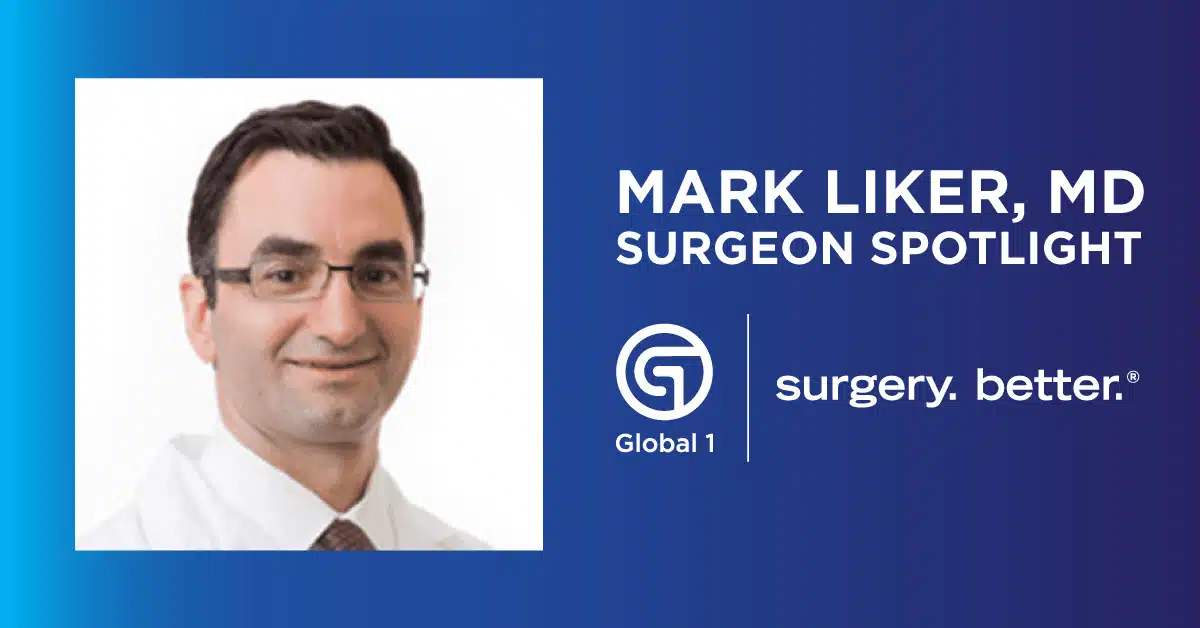
Each week, Global 1 features a prominent and renowned surgeon in their Surgeon Spotlight. And recently, they honored our very own Dr. Mark Liker. In their post, they wrote that “Dr. Liker’s broad range of training and experience gives him the insight needed to correctly diagnose complex brain and spine issues and identify the most effective treatments for his patients.”

Global 1 is the largest commercially insured bundled surgery network in California and amongst the largest in the nation, with a network of more than 125 outpatient surgery centers. Click here to read their full post honoring Dr. Liker.

Dr. Mark Liker Featured in Global 1’s Surgeon Spotlight

Each week, Global 1 features a prominent and renowned surgeon in their Surgeon Spotlight. And recently, they honored our very own Dr. Mark Liker. In their post, they wrote that “Dr. Liker’s broad range of training and experience gives him the insight needed to correctly diagnose complex brain and spine issues and identify the most effective treatments for his patients.”

Global 1 is the largest commercially insured bundled surgery network in California and amongst the largest in the nation, with a network of more than 125 outpatient surgery centers. Click here to read their full post honoring Dr. Liker.

New Study shows Remarkable Results

“It Saved My Life: Depression Treatment with rTMS Turns Lives Around” – new study finds…
A new neural remedy called Stanford neuromodulation therapy is being used to treat people struggling with mental illness with promising results. In five days or less, almost 80% of patients crossed into remission and experienced a normal mood within days.

This article highlights how the use of imaging allows more precise target of rTMS (repetitive Transcranial Magnetic Stimulation) treatment resulting in greater effectiveness.

You can read the full article in KQED: https://www.kqed.org/news/11898991/it-saved-my-life-depression-treatment-turns-lives-around-in-five-days

A couple of people who received treatment using this sophisticated targeting were quoted in the article:

After 45 years of depression and numerous failed attempts to medicate his illness, Tommy Van Brocklin, a civil engineer, says he didn’t see a way out. “The past couple of years I just started crying a lot,” he said. “I was just a real emotional wreck.”

So last September, Van Brocklin flew across the country from his home in Tennessee to Stanford, where he underwent the new rTMS treatment. Almost immediately he started feeling more optimistic and sleeping longer and deeper. “I wake up now and I want to come to work, whereas before I’d rather stick a sharp stick in my eye,” said Van Brocklin. “I have not had any depressed days since my treatment.”

He is hopeful the changes stick. More larger studies are needed to verify how long the new rTMS treatment will last.

At least for Emma, the woman who received Stanford’s treatment three years ago in a similar study, the results are holding. She says she still has ups and downs but “it’s an entirely different me dealing with it.”

She says the regimen rewired her from the inside out. “It saved my life, and I’ll be forever grateful,” said Emma, her voice cracking with emotion. “It saved my life.”

These studies are bringing hope to non-invasive and drug-free rTMS treatments!

MeRT involves the use of very sophisticated diagnostics to more precisely target treatment and is seeing some incredible results. Read more about MeRT and our protocols for treatment.

Pandemic-related depression rates continue to rise. Here’s what you can do.

We’re well into our third year of a global pandemic, and if you feel depressed, wondering when and if you’ll see an end to all this upheaval, you’re not alone. And even if you’re moving through this pandemic with your mental health relatively intact, just watching the news can bring on feelings of anxiety and depression.

So, it won’t surprise you that mental health conditions are on the rise: Depression among adults in the United States tripled in the early months of the COVID pandemic. And new research shows that this only increased in 2021, with depression affecting one in every three American adults.

Just some of what may be contributing to these mental health issues are:

  • Uncertainty about the future
  • Financial pressures
  • Altered daily routines
  • Information overload
  • Rumors and misinformation
  • Fear of getting sick or dying
  • Social isolation
  • Anger and divisiveness in the country and the world
  • Grief over the loss of loved ones
  • Mental health issues after recovering from COVID

June 2020 study by the CDC reported on the results of a survey done on over 5,400 US adults:

  • 40% said they were struggling with mental health or substance use
  • 31% reported symptoms of anxiety disorder or depressive disorder
  • 26% had trauma/stressor-related disorder symptoms
  • 13% said that they had started or increased substance use
  • 11% reported that they had seriously considered suicide

We are now almost two years past that study, and the mental health toll is only getting worse. In fact, suicide is the tenth leading cause of death in the U.S. and has been on the rise for teens and adults. The most recent statistics show that 8.9 percent of youth in grades 9-12 reported that they had made at least one suicide attempt in the past 12 months.

If you are feeling suicidal, please call 911. You can also call the National Suicide Prevention Lifeline at 1-800-273-TALK (1-800-273-8255). Additionally, we have listed some resources at the end of this article that may help.

How to Take Care of Your Mental Health

depression

Fortunately, there seems to be a bit of light at the end of the tunnel, as cities and countries are easing restrictions and infection rates drop. However, with all that’s going on, we see very little emphasis placed on our mental health. Here at BrainStim Centers, we care about your mental health. And we want to help you heal.

It begins with doing whatever you can to reduce the stress in your life. While you may not be able to control what’s happening in the world around you, you can do your best to take care of yourself and your mental health.

Here are some healthy ways the CDC recommends for coping with pandemic-related stress and anxiety:

  • Take breaks from watching, reading, or listening to the news. Try limiting it to a couple of times a day.
  • Take care of your body by eating healthy, exercising, and getting plenty of sleep.
  • Breathe — take deep breaths, stretch, or meditate.
  • Avoid consuming too much alcohol, tobacco, or other substances.
  • Know what to do if you are sick and are concerned about COVID-19, and contact your healthcare professional.
  • Have information on hand about any other support services, such as counseling or therapy.
  • Make time to unwind and do some other activities you enjoy.
  • Talk with people you trust about how you’re feeling. It helps to connect with others.
  • Become more involved with your community or faith-based organizations.

How We Can Help You: MeRT Treatment for Depression

While you do everything you can to ease the stress from this pandemic, sometimes the depression can still be overwhelming. And perhaps you haven’t responded to medications or other treatments as well as you’d hoped.

Depression is often initially treated with antidepressants, psychotherapy, or in many cases both, but sometimes these treatments don’t work fully on everyone. And sometimes people don’t tolerate the side effects well.

We have another option for treatment. It’s called MeRT, or Magnetic e-Resonance Therapy. MeRT is a long-lasting treatment for depression that is non-pharmaceutical and non-invasive, and MeRT is FDA-approved for the treatment of Depression and Major Depressive Disorder.

MeRT is a highly personalized treatment that focuses on balancing your brainwave activity to ease symptoms of depression. Patients who are clinically depressed have markers that we can see in their EEG studies, so the first step of MeRT is performing a qEEG, or brain map, to clearly locate those markers. Once we identify the imbalance, we can strengthen the brainwave activity through a highly personalized treatment plan using TMS.

Treatment for depression with MeRT has proven highly successful in permanently relieving patients of symptoms of depression, anxiety, and more.

Learn more about our proven treatments for depression here.

Additional Mental Health Resources

Find a health care provider or treatment for substance use disorder and mental health:

Interactive Map of Selected Federally Qualified Health Centers

SAMHSA’s National Helpline: 1-800-662-HELP (4357) and TTY 1-800-487-4889

Treatment Services Locator Website

How Childhood Trauma can Affect the Brain

Dr. Mark Liker, located in the Greater Los Angeles Area, Can Help You Overcome the Effects of Childhood Trauma

Childhood trauma is all too common these days. Approximately 14% of Americans report that they experienced emotional abuse or neglect during their childhood. And that trauma can also cause permanent changes to the structure of the brain.

A recent article in The Irish Times went into detail about brain health and adverse childhood experiences:

“Psychological studies have shown… that traumatic experiences in childhood have the potential to alter a child’s brain through the narrowing of neural pathways which may cause longer-term effects in areas such as attachment issues, physical health, emotional regulation, dissociation cognitive abilities, self-concept and behavioural [sic] control. Brain development in infancy and early childhood lays the foundation for all future development.”

It is important to note that extended periods of trauma in childhood can increase the chances of:

  • anxiety disorders
  • bipolar disorder
  • major depression
  • personality disorders
  • PTSD
  • psychosis

As another example, a study used an MRI to measure changes in brain structure among young adults who had experienced childhood trauma. As a result of their testing, they discovered differences in nine brain regions between those who had experienced childhood abuse and neglect and those who had not.

It’s probably not surprising to you that trauma in childhood affects people later in life. However, the manner in which this trauma alters the brain is important to understand. After all, the more we know the areas of the brain affected, the more we can treat those areas and lessen the effects in adults.

Call Our New Patient Coordinator to Learn More

CALL:(310) 895-7122

Three Levels of Childhood Stress

Childhood trauma is all too common these days. Approximately 14% of Americans report that they experienced emotional abuse or neglect during their childhood. And that trauma can also cause permanent changes to the structure of the brain.

A recent article in The Irish Times went into detail about brain health and adverse childhood experiences:

“Psychological studies have shown… that traumatic experiences in childhood have the potential to alter a child’s brain through the narrowing of neural pathways which may cause longer-term effects in areas such as attachment issues, physical health, emotional regulation, dissociation cognitive abilities, self-concept and behavioural [sic] control. Brain development in infancy and early childhood lays the foundation for all future development.”

It is important to note that extended periods of trauma in childhood can increase the chances of:

  • anxiety disorders
  • bipolar disorder
  • major depression
  • personality disorders
  • PTSD
  • psychosis

As another example, a study used an MRI to measure changes in brain structure among young adults who had experienced childhood trauma. As a result of their testing, they discovered differences in nine brain regions between those who had experienced childhood abuse and neglect and those who had not.

It’s probably not surprising to you that trauma in childhood affects people later in life. However, the manner in which this trauma alters the brain is important to understand. After all, the more we know the areas of the brain affected, the more we can treat those areas and lessen the effects in adults.

Call Our New Patient Coordinator to Learn More

CALL:(310) 895-7122

Three Levels of Childhood Stress

childhood trauma

Every child experiences stress. After all, stress is a part of life, and an important way to learn how to handle situations and increase resilience. However, there are different levels of stress, each of which has a different impact on the brain.

Positive Stress is a moderate type of stress, which only lasts for a short time and is a normal part of life. Examples of this type of stress may include being left in daycare for the first time or visiting the doctor. Learning to adjust to positive stress is vital for healthy childhood development.

Tolerable Stress can be more serious, such as the death of a loved one or a natural disaster. This type of stress can potentially cause damage to the brain but occurs infrequently enough to give the brain time to heal.

Toxic Stress is another matter entirely. This occurs when the stress is strong, frequent, and prolonged, such as abuse, neglect, or violence. This toxic stress disrupts normal brain development and can rewire certain parts of the brain.

Areas of the Brain Affected by Childhood Trauma

How Transcranial Magnetic Stimulation TMS Works to Improve Brain Function

The US Department of Health and Human Services laid out five different areas which may be affected by childhood stress and trauma:

  • Reduced size of the hippocampus, the area central to learning and memory.
  • Decrease in volume of the corpus callosum, responsible for communication between brain hemispheres and specifically, integrating motor, sensory, and cognitive performance.
  • Reduction in size of the cerebellum, affecting motor skills and coordination.
  • Smaller prefrontal cortex, which is critical for behavior, emotional and social regulation, and perception.
  • Overactivity in the amygdala, the area responsible for processing emotions and determining whether something is potentially dangerous.

As we have noted above, these impacts on the brain will affect how a child responds to life. Moreover, adults who have experienced this type of childhood neglect and abuse are far more likely to deal with depressionPost-traumatic Stress Disorder (PTSD), substance abuse, and more.

Recovering from this type of trauma and its long-term effects on the brain can be an arduous process, particularly when trying to figure out which forms of therapy will work. However, with the proper treatment, including therapies like MeRT, there is hope.

In essence, MeRT focuses on balancing brainwave activity to ease symptoms. We do this by performing a qEEG (brain mapping) to identify the imbalance. Then, we strengthen the brainwave activity through a highly personalized treatment plan using TMS.

Would you like a consultation with our New Patient Coordinator?

If you’ve been experiencing the adverse effects of childhood trauma, then we want to help. And it costs nothing to call us and talk about what is happening.

During your call, the New Patient Coordinator will listen to you and answer your questions. She will also explain our process and protocols, as well as costs, possible insurance benefits, and any other details you want to know.

There are no obligations and she will take all the time you need in order to determine whether you should take the next steps.

childhood trauma

Every child experiences stress. After all, stress is a part of life, and an important way to learn how to handle situations and increase resilience. However, there are different levels of stress, each of which has a different impact on the brain.

Positive Stress is a moderate type of stress, which only lasts for a short time and is a normal part of life. Examples of this type of stress may include being left in daycare for the first time or visiting the doctor. Learning to adjust to positive stress is vital for healthy childhood development.

Tolerable Stress can be more serious, such as the death of a loved one or a natural disaster. This type of stress can potentially cause damage to the brain but occurs infrequently enough to give the brain time to heal.

Toxic Stress is another matter entirely. This occurs when the stress is strong, frequent, and prolonged, such as abuse, neglect, or violence. This toxic stress disrupts normal brain development and can rewire certain parts of the brain.

Areas of the Brain Affected by Childhood Trauma

How Transcranial Magnetic Stimulation TMS Works to Improve Brain Function

The US Department of Health and Human Services laid out five different areas which may be affected by childhood stress and trauma:

  • Reduced size of the hippocampus, the area central to learning and memory.
  • Decrease in volume of the corpus callosum, responsible for communication between brain hemispheres and specifically, integrating motor, sensory, and cognitive performance.
  • Reduction in size of the cerebellum, affecting motor skills and coordination.
  • Smaller prefrontal cortex, which is critical for behavior, emotional and social regulation, and perception.
  • Overactivity in the amygdala, the area responsible for processing emotions and determining whether something is potentially dangerous.

As we have noted above, these impacts on the brain will affect how a child responds to life. Moreover, adults who have experienced this type of childhood neglect and abuse are far more likely to deal with depressionPost-traumatic Stress Disorder (PTSD), substance abuse, and more.

Recovering from this type of trauma and its long-term effects on the brain can be an arduous process, particularly when trying to figure out which forms of therapy will work. However, with the proper treatment, including therapies like MeRT, there is hope.

In essence, MeRT focuses on balancing brainwave activity to ease symptoms. We do this by performing a qEEG (brain mapping) to identify the imbalance. Then, we strengthen the brainwave activity through a highly personalized treatment plan using TMS.

Would you like a consultation with our New Patient Coordinator?

If you’ve been experiencing the adverse effects of childhood trauma, then we want to help. And it costs nothing to call us and talk about what is happening.

During your call, the New Patient Coordinator will listen to you and answer your questions. She will also explain our process and protocols, as well as costs, possible insurance benefits, and any other details you want to know.

There are no obligations and she will take all the time you need in order to determine whether you should take the next steps.

Can mild autism get worse with age?

As we age, our bodies and minds change in a variety of ways. For some people with mild autism, these changes can cause their symptoms to become worse. This can be difficult to manage and understand, especially since most people with autism are not diagnosed until they are children. In this blog post, we will explore how mild autism can worsen with age and what steps can be taken to help manage the symptoms.

Autism is a spectrum disorder that affects people in different ways.

Autism is a disorder that presents itself in varying degrees and has different forms of expression. It affects each individual differently and is characterized by impaired social skills, language, and communication difficulties, among many other symptoms. Cognitive ability can be impacted, with individuals having difficulty understanding their environment or processing information. Autism also affects motor skills in some cases, meaning coordination and control of bodily movements may be affected too. Every individual is unique, and those with autism will each face a unique set of challenges or have certain strengths or weaknesses related to their condition. With appropriate support, individuals with autism have the potential to live meaningful life and reach their full potential.

Some people with autism experience worsening symptoms as they age

As individuals affected by autism age, the manifestation of their condition can become more significant. Symptoms may increase in severity, more profound social interaction and communication challenges can present, and anxiety levels could rise. Scientific research has identified different elements at work, such as physiological changes or difficulty with adjustment to common experiences like retirement or the loss of a caregiver. Because of this, it is important for older individuals to monitor how they are feeling and be aware that certain situations may trigger a change in their symptoms. Families and caregivers should be mindful of behavior shifts and ensure these people have access to necessary resources such as mental health services.

There are treatments available that can help manage symptoms of autism, even if they worsen over time.

MeRT Treatment has been proven to be an effective way to manage the symptoms of autism, even when they worsen over time. MeRT stands for Magnetic eResonance Therapy and uses a combination of magnetic stimulation and neurologically-compatible software programs to help balance brain functioning. Researchers have found that MeRT Treatment can significantly reduce symptoms such as aggression, violent behavior, and depression from occurring in those with autism; in essence, it reengages the part of their brains that regulates emotion. More studies on MeRT Treatment are still necessary and ongoing, but for those living with autism, MeRT Therapy is a viable option and often one that yields very positive results.

Though interpreting and managing autism can often be a challenge, individuals with the disorder should not hesitate to seek help when needed. The available treatments, therapies, and techniques are what make a positive difference in the lives of so many people on the autism spectrum. With commitment and hard work, we can all strive for a better understanding of what is required for the effective management of autism symptoms. We must remember that although circumstances may change as someone with autism ages, they still deserve equal respect and access to the care they need to live a full and rewarding life. It is also important to recognize that while autism has associated challenges, it remains an inspiring example of resilience and triumph over adversity — everyone affected by it has something special to offer the world around them.

TMS Therapy: An Innovative Treatment Option for OCD Sufferers

Obsessive-Compulsive Disorder (OCD) is a mental health condition affecting millions of people worldwide. Intrusive thoughts, compulsive behaviours, and anxiety characterise it. One treatment option for those suffering from OCD is Transcranial Magnetic Stimulation (TMS) therapy. This non-invasive procedure uses high-power magnets to stimulate areas of the brain responsible for causing symptoms of OCD. Let’s examine how TMS therapy works and why it could be a useful treatment option for those with OCD.

What Is Transcranial Magnetic Stimulation?

Transcranial Magnetic Stimulation is an innovative technology developed by BrainsWay to treat depression, anxiety, and other mental health disorders like OCD. The system consists of a magnetic coil that emits magnetic pulses that penetrate deep into the brain to stimulate areas responsible for causing symptoms of depression, anxiety, and other mental health conditions. These pulses help modulate the activity in certain brain parts, reducing symptoms associated with these conditions.

The Benefits of TMS Therapy for OCD Sufferers

TMS therapy is effective in reducing symptoms associated with OCD, such as intrusive thoughts and compulsive behaviours. Additionally, this treatment is particularly effective as it directly targets areas of the brain responsible for causing these symptoms without affecting other areas of the brain or body. Furthermore, because it is non-invasive, there are no side effects associated with this type of treatment, making it an attractive option for those wanting to relieve their symptoms without taking medication or undergoing surgery.

Recommended Treatment Option for Those Living with OCD

For those living with Obsessive Compulsive Disorder (OCD), Transcranial Magnetic Stimulation (TMS) therapy can be an effective treatment option. This non-invasive procedure utilizes high-power magnets to target specific areas of the brain responsible for causing symptoms associated with OCD, such as intrusive thoughts and compulsive behaviours. As this form of treatment does not have any side effects and is effective in reducing symptoms related to OCD, it may be worth considering this innovative new technology if you suffer from this condition. If you want more information about TMS or assistance finding available resources, please contact us today!