
Service members, retirees and families
TRICARE
We check your plan, and help with any referral or authorization it needs.

TMS therapy for veterans, service members and military families
TMS for depression, anxiety and PTSD, overseen by a psychiatric provider. We work with TRICARE and TriWest (VA Community Care), and we check your benefits for you before anything is booked.
Book my free evaluation (opens Calendly)Call (310) 895-7122
TMS is FDA-cleared for depression. Its use for PTSD is off-label. Coverage depends on your plan.
Limited time · Free
As a thank you for your service, we’re offering a complimentary Brain Health Evaluation, for a limited time, to eligible active-duty service members, veterans, reservists and dependents.
Whether it’s mood, memory, focus, sleep, or the effects of a concussion or your service, it’s a first step toward better brain health.
What’s included
Schedule my free evaluation (opens Calendly)
About an hour, at one of our clinics. Or call (310) 895-7122.
“I sit where I can see the door.”
“Fine at work. Not fine at 3 a.m.”
“A car backfires and I’m back there.”
“My fuse with the kids is shorter than I want.”
“I stopped calling the guys from my unit.”
“I tell everyone I’m good. I’m not.”
If any of this sounds like you, you’re far from alone, and it isn’t weakness. It’s something we can help with.
In crisis right now? Dial 988, then press 1, for the Veterans Crisis Line. Or text 838255.
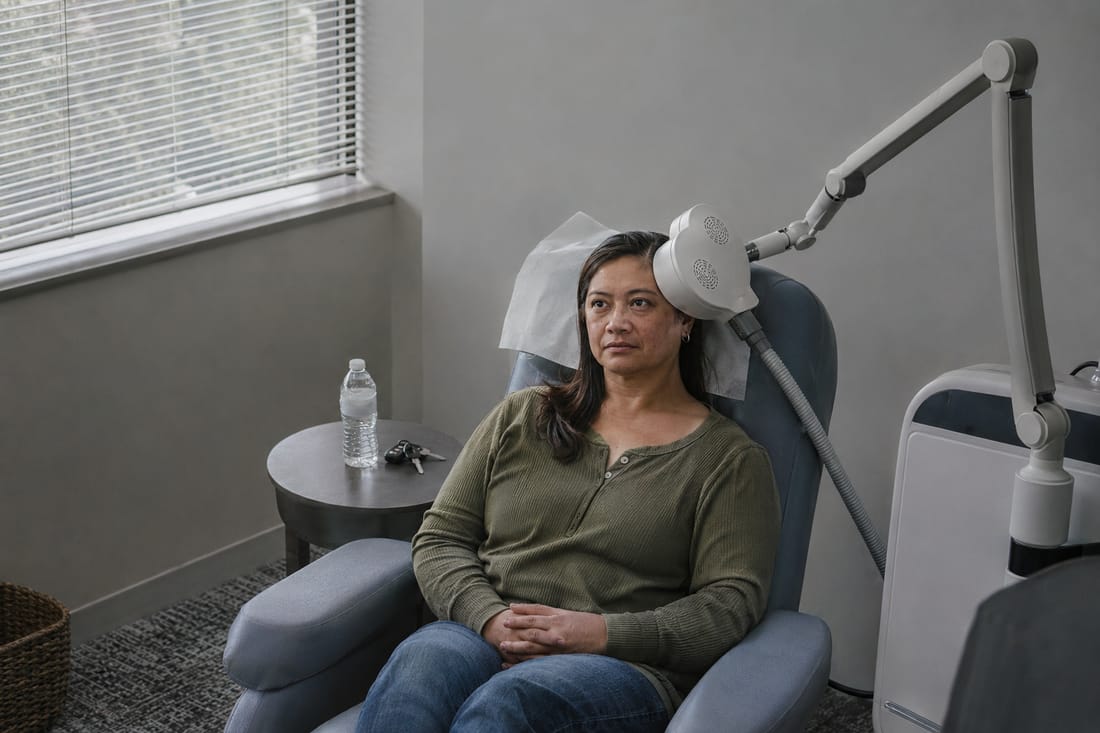
TMS, transcranial magnetic stimulation, is a non-invasive treatment. Gentle magnetic pulses stimulate the parts of the brain involved in mood. It’s FDA-cleared for depression.
The most common side effects are scalp discomfort and headache. Seizures are rare.
In service, your brain learned to scan for danger and react fast. Back home, that alarm can stay on, long after you need it.
TMS sends gentle magnetic pulses to the front of the brain, the part that helps calm that alarm. The aim is to turn the volume down.

01
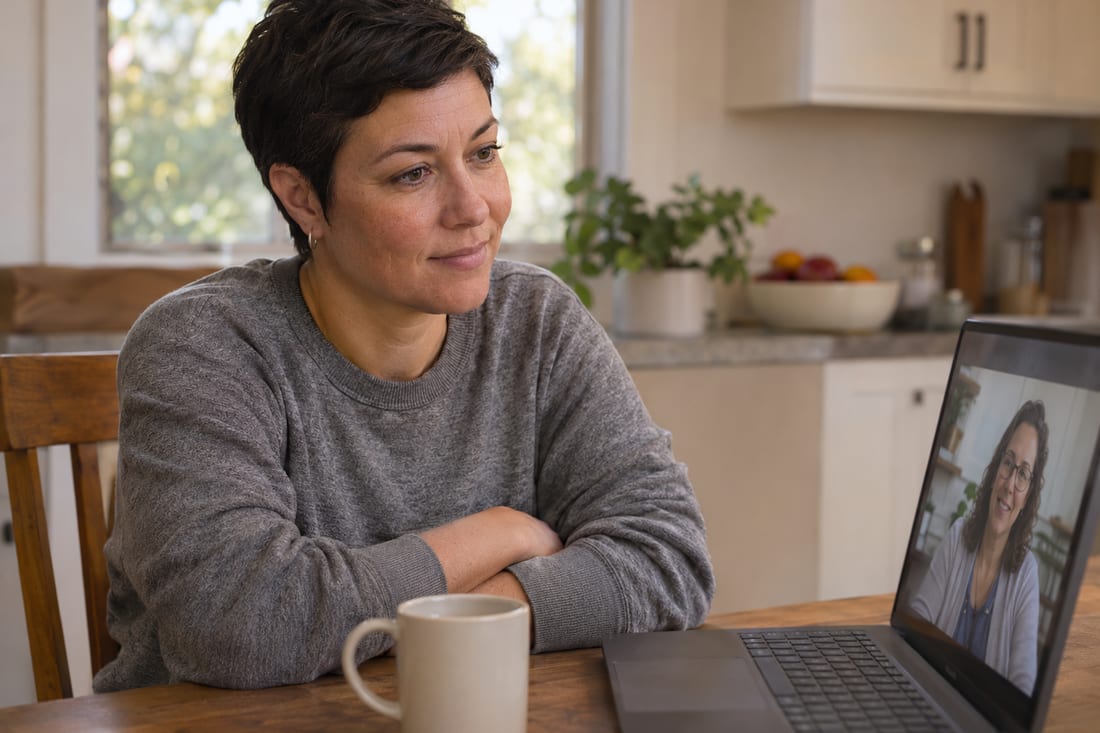
Our New Patient Coordinator listens, and checks your TRICARE or TriWest benefits for you.
02
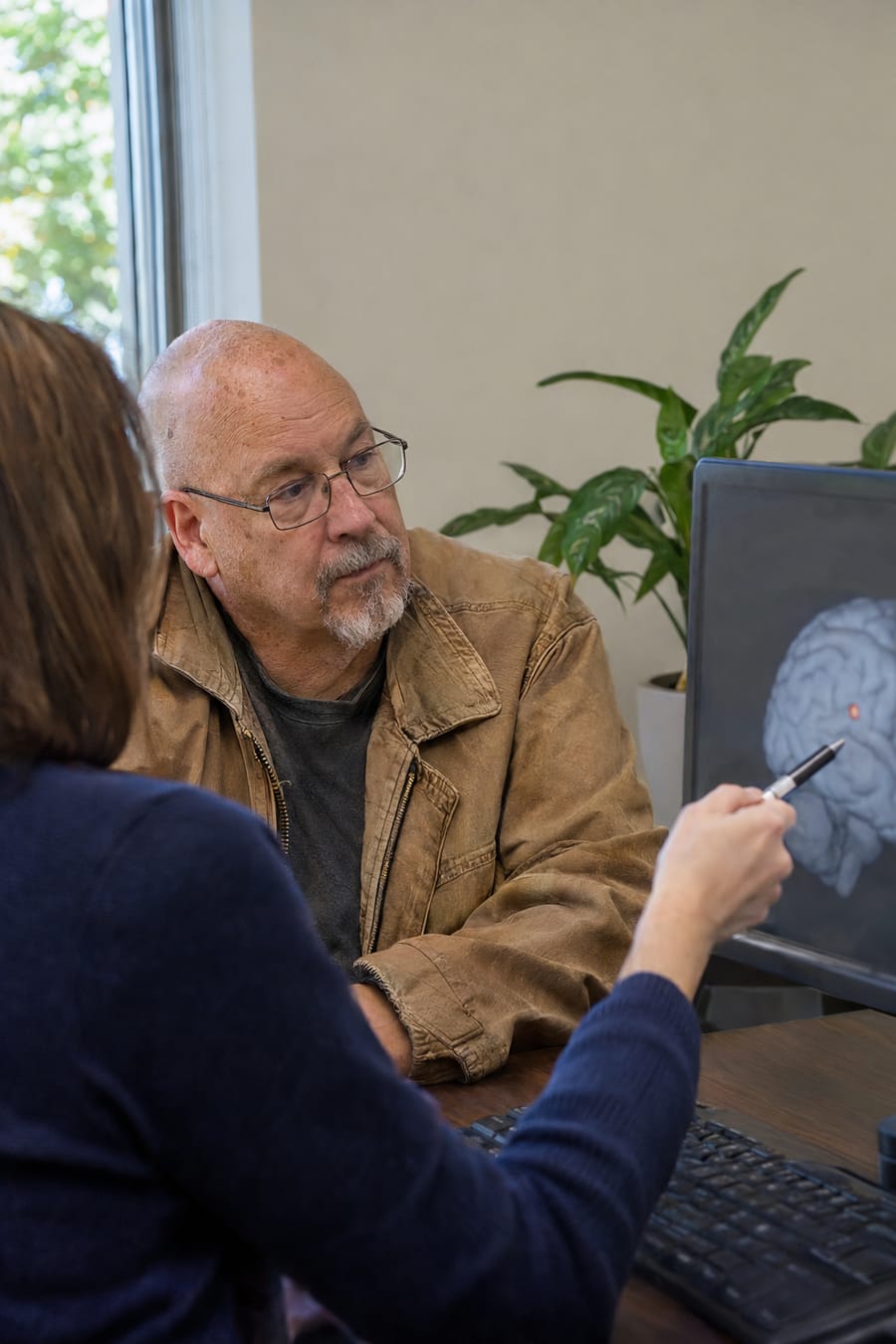
A psychiatric evaluation: what you’re living with and what you’ve tried. It can be by telehealth.
03
Your psychiatric provider plans your TMS with you, around the care you already have.
04
About 20 to 30 minutes a day, overseen by your provider. You drive yourself home.
Service members, retirees and families
We check your plan, and help with any referral or authorization it needs.
Veterans using VA care
Community Care starts with a referral from your VA. Tell us where you are, and we’ll help with the next step.
When you ask us to check
Coverage depends on your plan. TMS for depression is often covered; for PTSD, some plans cover it case by case. We’ll tell you exactly what we find.

Our psychiatrist and psychiatric nurse practitioners look after you from your first visit to your last session. The provider who evaluates you is the one who oversees your TMS, so you never start over with someone new.
For VA Community Care, yes: it starts with a referral from your VA. With TRICARE, it depends on your plan. Prime usually needs one from your primary care manager. We’ll help you work out what you need.
Yes. Tell us when you call, and we’ll go through the TRICARE steps with you.
TMS is FDA-cleared for depression. For PTSD, it’s used off-label. Many people with PTSD also live with depression, and treating it can be part of your plan. We’ll explain what that means for you before you decide.
A light tapping on your scalp. You’re awake, there’s no anesthesia, and you can drive yourself home and get on with your day. Scalp discomfort and headache can occur; seizures are rare.
A psychiatric provider: our psychiatrist or one of our psychiatric nurse practitioners. The same provider evaluates you, prescribes your TMS and oversees it from start to finish, and we encourage a short check-in with them each week. If you need help with medication, they can look after that too.
Usually not. TMS is often added to the care you already have, and you can keep your own doctor and therapist. Please don’t stop a medication on your own.
Yes. Many calls start with a spouse, a parent or a friend. We’ll talk you through how to help.

If you served, or you love someone who did, make the call. We’ll handle the paperwork.